

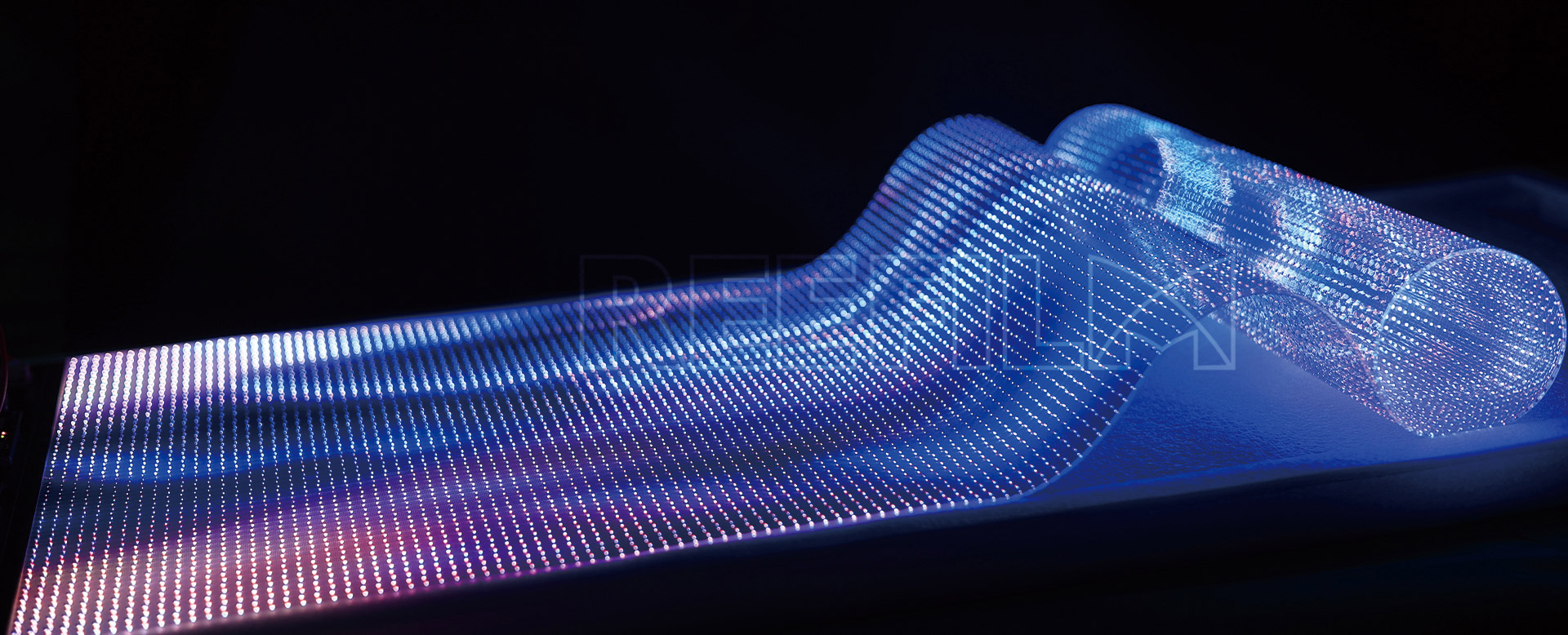
A flexible LED screen panel refers to an LED display panel made of flexible materials, which can be bent, folded, or rolled up according to specific needs. It has significant differences from traditional rigid LED display panels in terms of material, shape, performance, and application scenarios. The following is a detailed introduction:Core Materials and StructureFlexible Substrate: Usually made of bendable materials such as polyimide (PI) or polyethylene naphthalate (PET), which support the LED modules and enable the screen to have various shapes without affecting the structural integrity.LED Modules: Composed of small LED units mounted on flexible circuit boards. The pixel pitch (the distance between LEDs) determines the resolution of the display panel.Flexible PCB: Used to facilitate electrical connections, power the LEDs, and control the data flow, ensuring the normal operation of the display panel.Protection Layers: Including soft masks and cover layers to protect the LEDs from dust, debris, and physical damage, improving the durability of the panel.
Physical CharacteristicsBendability: It can be bent into various shapes, such as arcs, circles, waves, etc. Some products can even achieve a bending radius as low as 30 mm. For example, cylindrical flexible LED screen panels can be wrapped around pillars to achieve 360-degree viewing.Thinness and Lightness: Generally, it is thinner and lighter than traditional rigid panels. The thickness is usually 5-15 mm, and the weig


